The Paragraph in Literary Aesthetics
Examples from Flaubert’s Bouvard and Pécuchet
Abstract
This study reveals the paragraph’s complexity but limited aesthetic contribution. The general question of the ornament’s part in the work of art (through which Jacques Derrida challenges Immanuel Kant) frames the subject and extends previous inquiry on punctuation. Through Charles Peirce I discover three kinds of relations that paragraph divisions emphasize for the reader: autonomy, contrast, and pattern. Two passages from Gustave Flaubert’s Bouvard and Pécuchet demonstrate the normal order and wayward play of these relations. The novel’s opening passage mixes genres to create a multilayered pastiche of Genesis and naturalism, while the third chapter satirizes a chemistry textbook and reflects on the molecular structure of narration. My formal reading indicates how paragraph indentations ornament a beautifully ironic play of relations that ultimately springs from language and not from the material page.
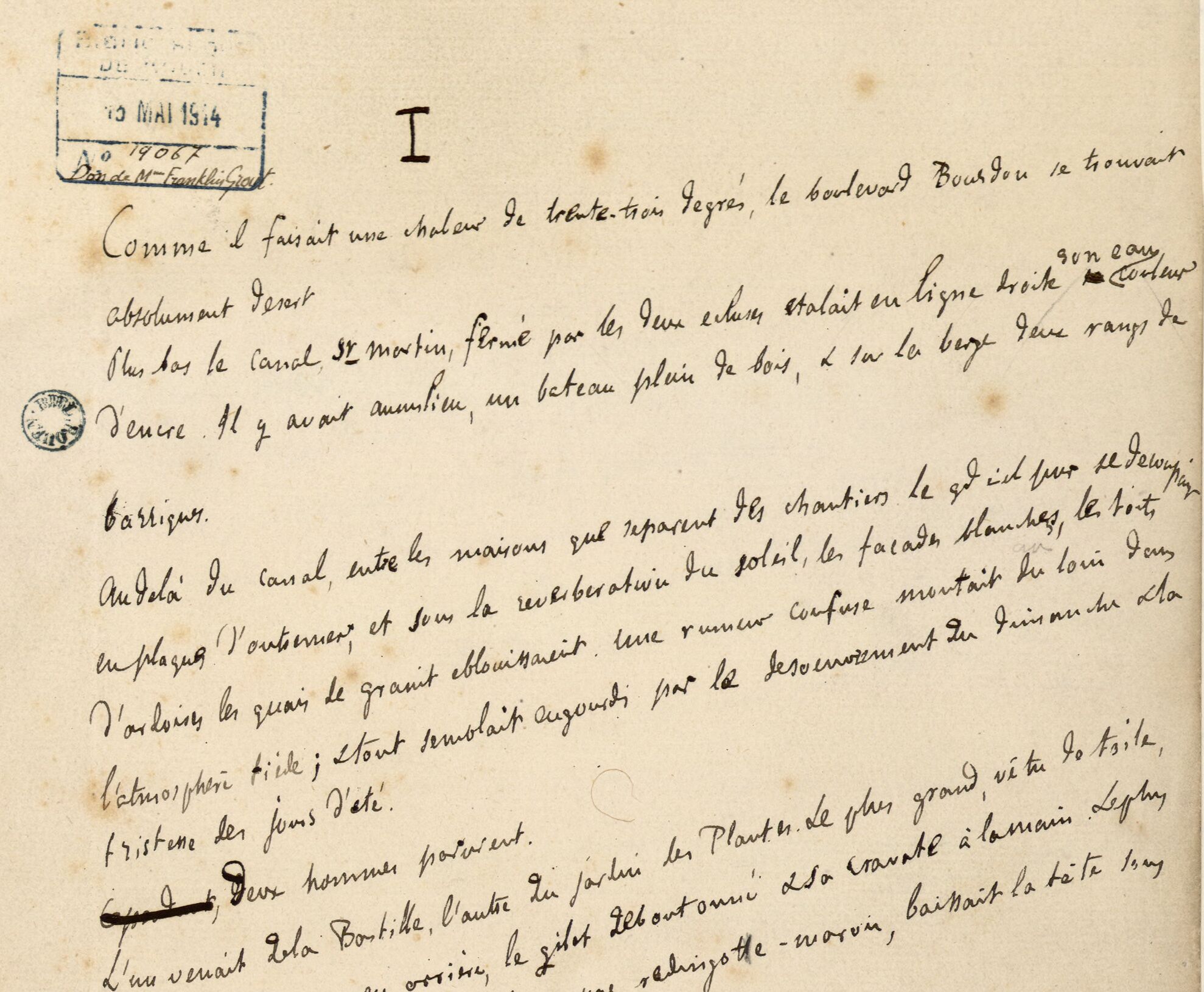
At bottom, the blank space of indentation is a dumb ornament that emphasizes rhetorical joints within the text that are complex.
The text’s material support does not initiate aesthetic movement; rather, paragraphs and punctuation can ornament the matrix of relations that constitute language.